
Reviewed · POMPEII & VESUVIUS TOURS
From Sorrento: Pompeii Ruins All-inclusive Guided Tour
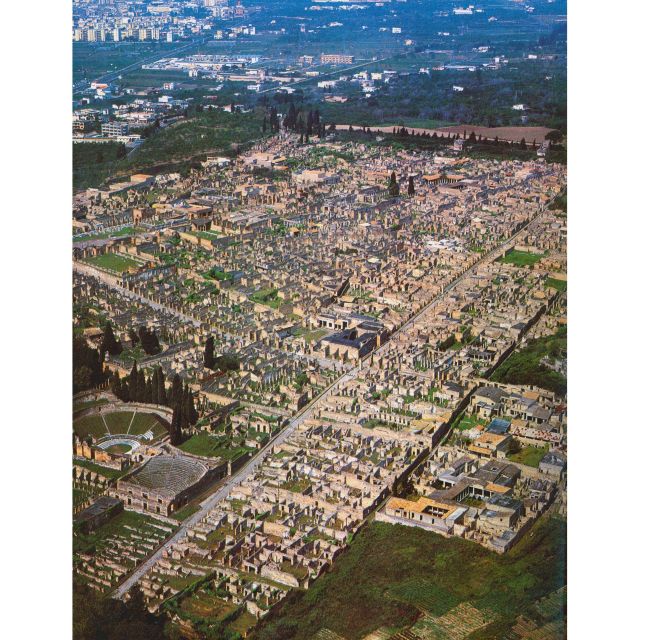
Pompeii is not a museum behind glass. You walk its streets, peer into ancient shops, and see cooking tools, painted walls, mosaics, and body casts where the city was buried by Vesuvius in 79 AD. This two-hour tour gives you a clear route through a huge site that can otherwise feel like a maze.
I like the simple train connection from Sorrento and the fact that your entrance ticket and guided visit are bundled together. I also like the guides’ strong record for clear storytelling, humor, and patient answers. The main drawback is the shared train and group format: the train can be crowded, and groups of more than 20 can make it harder to hear unless headsets are provided.
Key points to know before you book
- The train starts at Sorrento’s Circumvesuviana station: Collect your tickets at the Tempio Travel office and be ready to board at least five minutes before departure.
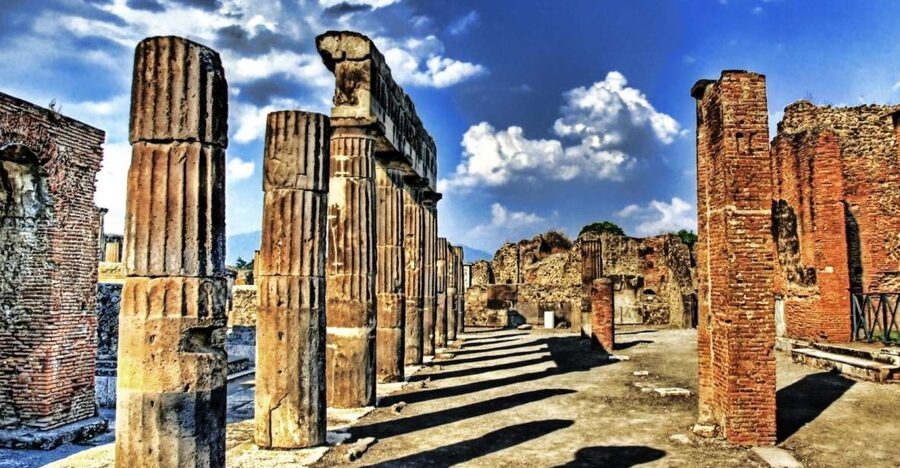
- Pompeii is much easier with a route: Your guide leads you to the Forum, Temple of Jupiter, baths, theaters, villas, bakery, thermopolia, mosaics, and frescoes.
- The tour lasts about two hours: That is enough for the main sights, but Pompeii is large enough to justify extra time on your own.
- Heat is a serious factor: Bring water, a sunhat, and comfortable shoes. There is little shade and uneven ground.
- Guides are the strongest part of the experience: Laura, Ciro, Giana, Maria, and other English or Italian guides have been praised for clear explanations, humor, and good pacing.
- The train ride is practical, not luxurious: Expect a shared train, possible crowding, and, on some services, no air conditioning.
Starting at Sorrento’s Circumvesuviana station
Your day begins at the Tempio Travel office inside Sorrento’s Circumvesuviana station. You collect the train and tour information there, then make your way to the platform. Be ready at least five minutes before departure, since this is a scheduled public train rather than a private transfer.
The arrangement is useful because you do not have to arrange a separate Pompeii ticket or work out the return fare. Still, the meeting process may not feel perfectly polished. Some people have had to exchange a voucher for the actual train tickets at the gate, and the office can be difficult to find or slow to open. I would arrive early, read the directions carefully, and ask station staff for the Tempio Travel office if needed.
The train from Sorrento to Pompeii is short, but it is a public service. You may stand, and seats are not guaranteed. The trip is part of the bargain, not a private sightseeing transfer, so keep your expectations practical.
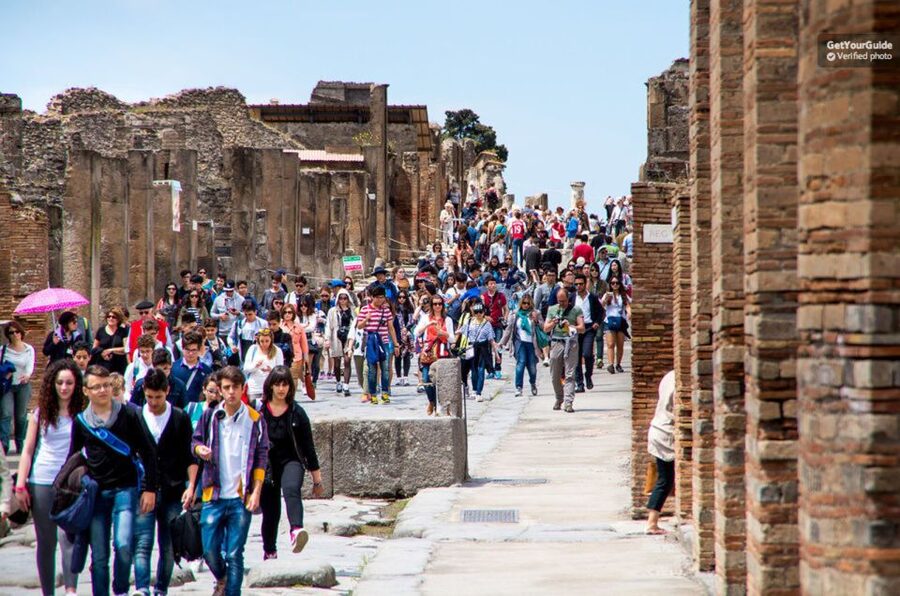
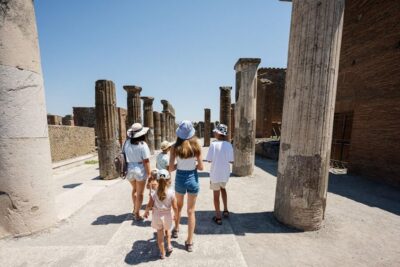
At Pompeii, you meet the guide and join the walking group. The tour is offered in English or Italian, and the group size can reach more than 20 people. Headsets were available on some departures and made a big difference. If your group is large, stay near the guide and make sure your receiver is working before you set off.
A few other Sorrento mornings to weigh against this
- Sorrento: Skip-the-Line Pompeii Express Tour by Train
★ 4.8 · 2,038 reviews - Priority Access Pompeii & Mt. Vesuvius Full day from Sorrento
★ 4.5 · 1,376 reviews - Pompeii Express Guided Tour by Train from Sorrento
★ 4.5 · 770 reviews
Entering the city buried by Vesuvius
Pompeii rewards context. Without a guide, the ruins can look like a long succession of stone walls and empty rooms. With a good explanation, the streets begin to show how people lived, worked, worshiped, bathed, and ate before the eruption.
The guide explains the disaster of 79 AD while leading you through the remains of the Roman town. The story is powerful because the site preserves ordinary details, not just grand monuments. You see the places where people bought food, prepared meals, visited public baths, and gathered in civic spaces.
The best guides make this human scale clear. Ciro has been praised for combining humor with careful explanations and for keeping the group together. Laura has brought new details even to people who had visited Pompeii before. Giana has been described as energetic, while Maria has been praised for her friendly and informative style. Your guide will depend on the departure, but the tour’s strongest feature is the quality of its storytelling.
Do not expect every corner of Pompeii in two hours. The archaeological site is enormous. The point of this visit is to see the major features, learn how to read the ruins, and leave with a sensible list of places to inspect if you have extra time.
The Forum and Temple of Jupiter
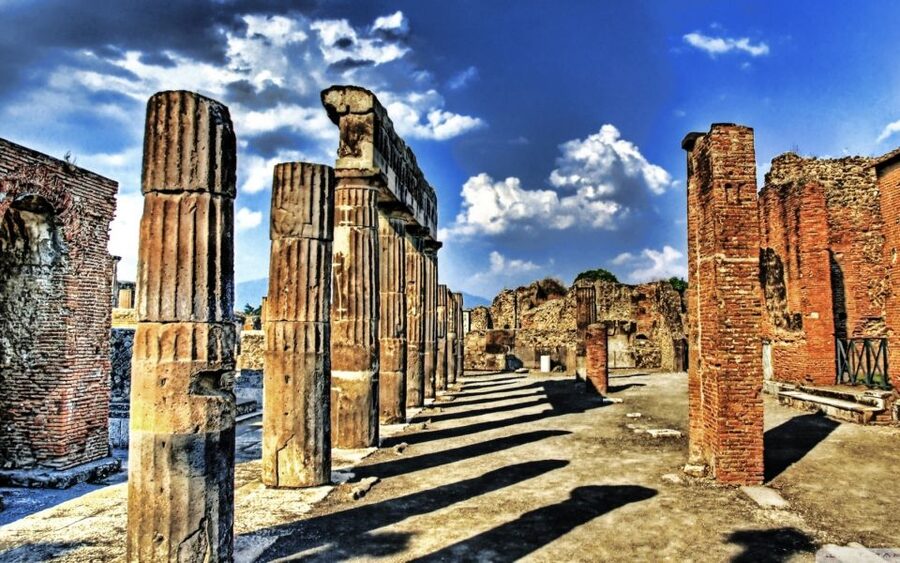
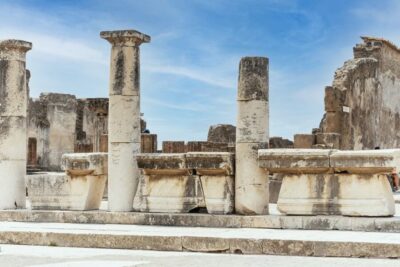
The Forum is one of the essential stops. This broad civic center was the heart of public life, surrounded by temples and important buildings. Your guide can help you picture it as a working public space rather than a field of fallen columns.
The Temple of Jupiter gives the route a strong architectural focus. It also helps explain the religious and political world of the city. Look closely at the surviving stonework and the way the open spaces connect to nearby buildings.
I value this part of the tour because it gives Pompeii a sense of scale. You begin to see that this was not a single villa or isolated ruin. It was a functioning city with public institutions, commercial streets, religious buildings, entertainment venues, and homes.
The Forum can be exposed to the sun, and the paving is uneven. Comfortable shoes are not optional decoration here. They help you walk with attention instead of spending the whole visit watching your feet.
Baths, theaters, villas, and daily routines

The Roman Baths show how much public life depended on shared facilities. The guide explains what these spaces were used for and how they fit into the rhythm of the town. The remains are not always easy to interpret at a glance, so this is one place where a live explanation adds real value.
The route also includes theaters and famous villas. The villas are important because they connect grand decoration with private life. Mosaics and frescoes reveal the taste and status of the people who lived there, while the theater ruins show another side of public entertainment.
You may see details that are easy to miss alone, such as decorative patterns, room layouts, or the position of a building along the street. The guide’s job is not simply to name each ruin. It is to point out what the surviving pieces tell you about the people who used them.
This is also where the two-hour limit becomes noticeable. Guides generally keep a leisurely pace, and several departures have included time for questions. Even so, you will not have time to linger at every villa or theater. I would treat the guided route as your orientation, then use any remaining time to return to the places that caught your attention.
Same city, an entirely different afternoon:
- Sorrento: Exclusive Capri Boat Tour and Optional Blue Grotto
★ 4.8 · 3,170 reviews - Sorrento Farm and Food Experience including Olive Oil, Limoncello, Wine tasting
★ 5.0 · 2,524 reviews - Capri Blue Grotto Small-Group Boat Day Tour From Sorrento
★ 4.5 · 2,511 reviews - From Sorrento/Nerano: Amalfi and Positano Boat Tour
★ 4.6 · 2,440 reviews
The bakery, thermopolia, and Pompeii’s small details
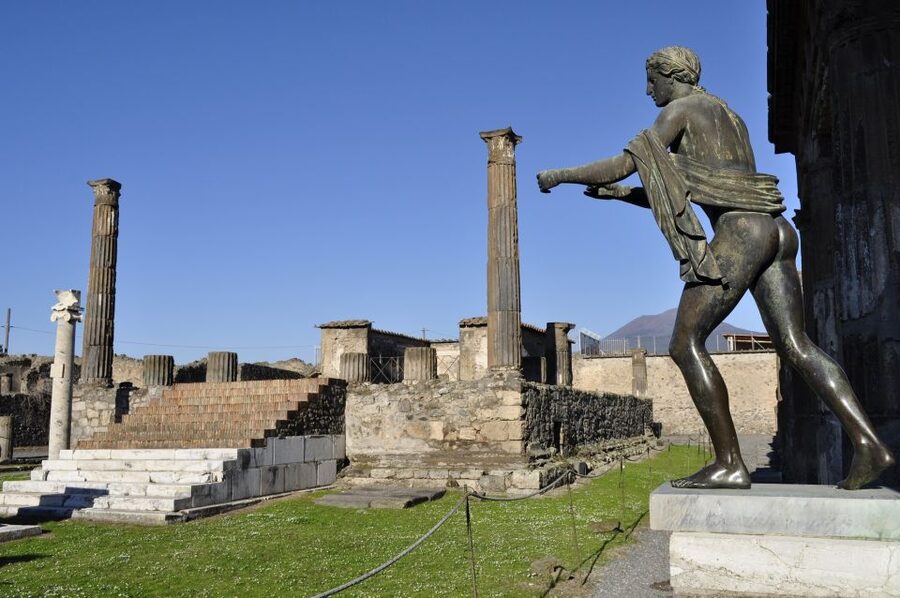
Some of the most memorable stops are not the grand temples. Pompeii’s bakery and its cooking utensils bring the ancient city down to kitchen level. These objects help you imagine food production as work carried out by real people, not as an abstract part of Roman life.
The thermopolia are especially interesting. These street-side food counters served prepared food and drinks, and their counters make the city feel surprisingly familiar. The name may be new to you, but the basic idea is easy to understand once the guide points out the serving features.
I like these stops because they answer the question most visitors bring to Pompeii: what was everyday life actually like? A temple can show civic values, but a shop counter or cooking tool shows how people ate, worked, and moved through the day.
The preserved mosaics and frescoes add another layer. Colors, patterns, and painted scenes survived in ways you might not expect after the eruption and centuries underground. Pay attention to the guide’s explanation of where these decorations appeared and what they signaled about a home or business.
Body casts and the human cost of the eruption
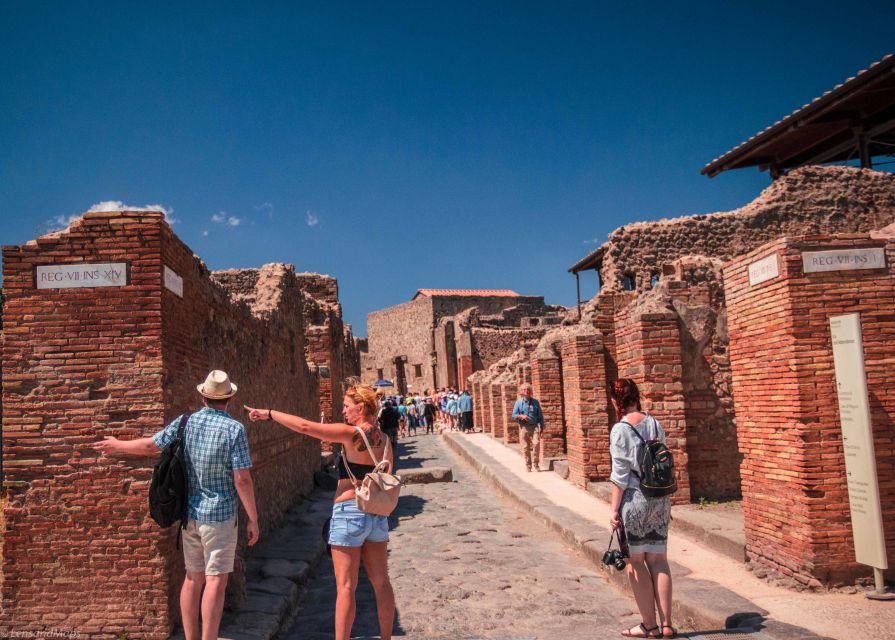
The body casts are among Pompeii’s most difficult sights. They preserve the shapes of citizens caught in the disaster, and they make the eruption feel immediate in a way that walls and columns cannot.
Your guide explains the events of 79 AD while keeping the focus on the people who lived in the city. This section may be upsetting, particularly for children, so consider your group’s interests and tolerance before booking.
The power of Pompeii comes from the contrast. One moment you are looking at a bakery or painted room. The next, you are facing evidence of sudden death. The tour does not need dramatic language to make the point. The remains speak clearly enough.
A good guide gives you time to take in these sights without rushing. The best departures balance facts with a respectful tone. If you want a longer, slower visit to the casts and surrounding buildings, the two-hour guided route may feel like an introduction rather than a complete visit.
What the two-hour timing really means
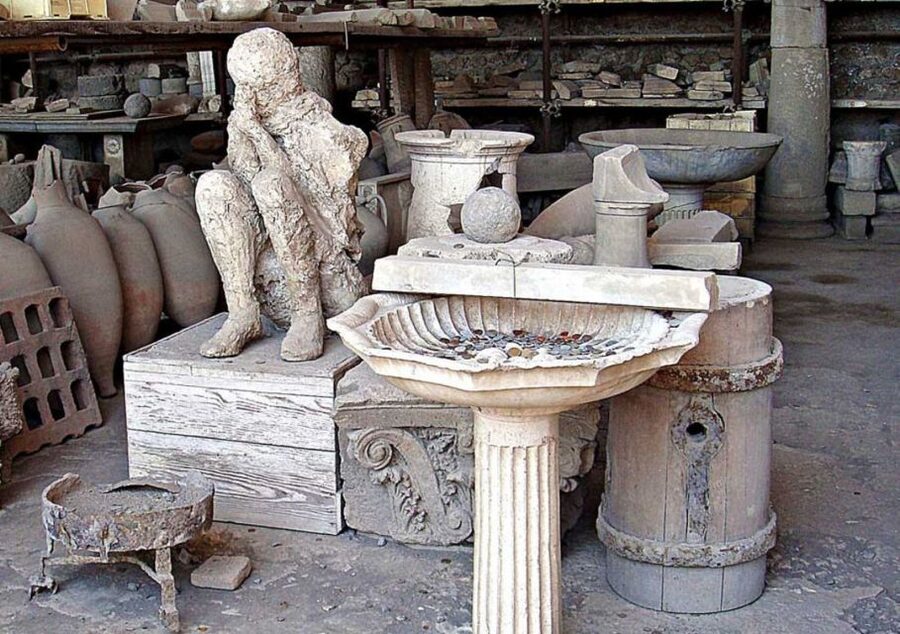
Two hours is a sensible length in summer heat. Several people have found that two to two and a half hours was enough when the sun was intense. Pompeii has little shade, few places to sit, and long stretches of exposed paving, so a shorter focused visit can be easier than an all-day walk.
At the same time, Pompeii is too large to cover fully in two hours. The guide takes you to the main sights and may suggest additional areas to see after the formal tour ends. That advice is useful because it lets you choose your next stop instead of wandering without a plan.
Think of the tour in two parts:
- The guided portion gives you structure, background, and the key landmarks.
- Your extra time lets you revisit a villa, inspect more streets, or follow the suggested route at your own pace.
Bring water and a hat in warm weather. An umbrella can provide extra shade, although it may be awkward in a crowd. Pace yourself, especially if you have already visited Vesuvius or plan to do so later in the day.
The return trip to Sorrento
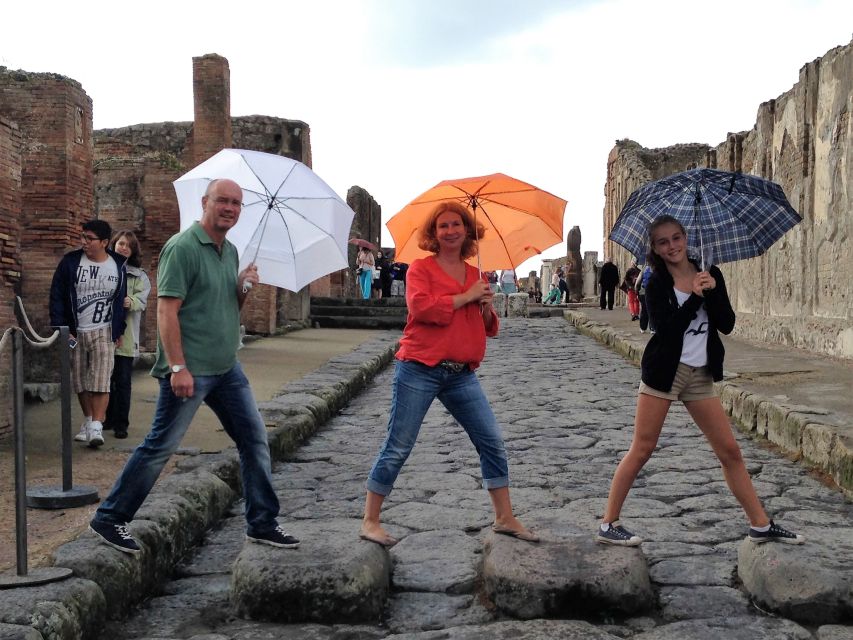
When the guided visit ends, you return to the station and take the train back to Sorrento. This is not a private ride with a representative beside you, so pay attention to the meeting instructions and allow yourself time to get back to the platform.
The return train may make many stops, and air conditioning is not guaranteed. It can be crowded, particularly at busy times. That is the main transportation compromise in this package. You save the effort of buying and organizing the fare, but you do not receive the comfort or personal attention of a private vehicle.
For many people, the tradeoff is fair. The train keeps the total price down and links two major Campania destinations without arranging a full-day car. If you want a quiet, door-to-door day, choose a private transfer instead. If you mainly want a simple connection from Sorrento and a solid introduction to Pompeii, this setup works.
Is $66.27 a fair price?
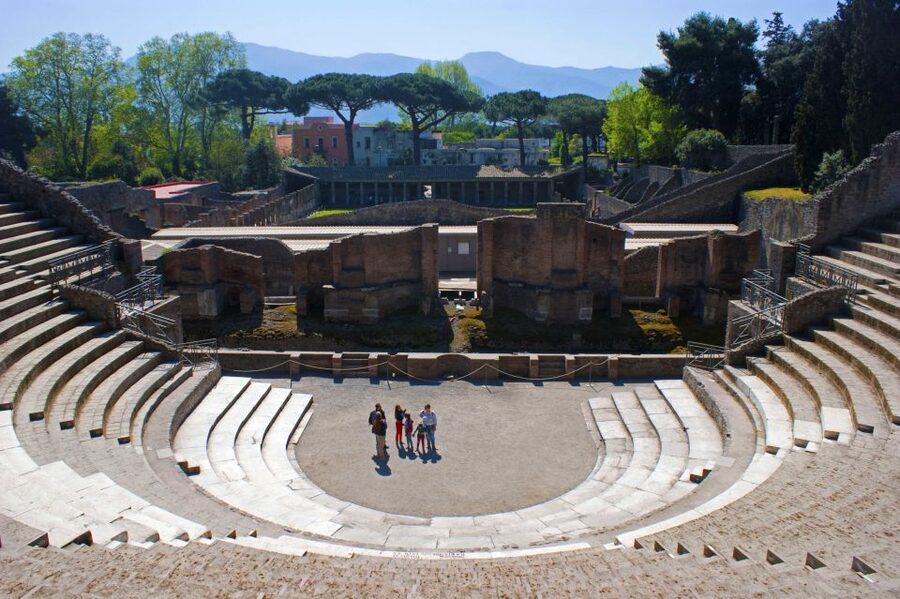
At $66.27 per person, the tour sits in a useful middle ground. You pay for the Pompeii entrance, a live guided tour, and the return train ticket. That saves you from handling separate ticket purchases and gives you an expert route through a site where poor planning can waste time.
The value depends on what you want from Pompeii. If you are happy to read a map and explore on your own, a guided visit may cost more than buying admission alone. If you want the major sights explained and prefer not to worry about the train fare or entry process, the package is more appealing.
I would call it good value for a first visit, especially if your time in Campania is limited. The price feels less attractive if you expect a private guide, a small group, or a private vehicle. This is a shared tour, and the train remains a public service.
Free cancellation up to 24 hours before the activity and the option to reserve now and pay later add flexibility. Bring a passport or ID card, as requested for the activity.
Who should choose this Pompeii tour?
I would recommend it to you if you are staying in Sorrento and want a straightforward Pompeii visit without arranging each piece yourself. It suits first-time visitors who want the Forum, baths, Temple of Jupiter, theaters, villas, food counters, and decorated interiors explained in a logical order.
It is also a good choice for people who value stories over a long independent walk. Guides have been praised for good English, humor, patience, and the ability to keep a group engaged. Audio receivers can help, but you should still stay close if the group is large.
I would be more cautious if you dislike public transport, hot open-air sites, or group tours. The train may be crowded, ticket collection can be confusing, and a group of 20 or more may limit the number of questions you can ask.
Should you book it?
Book this tour if you want an affordable, well-organized introduction to Pompeii from Sorrento, with the train fare and admission handled together. The strongest reason to choose it is the guide: a good one turns scattered ruins into a readable city and helps you notice the bakery tools, thermopolia, frescoes, and civic spaces that you might otherwise pass.
Skip it in favor of a longer or private visit if Pompeii is the main purpose of your trip. Two hours covers the headline sights, but the site deserves more time if you want to explore its quieter streets and additional villas. For most people making a day trip from Sorrento, though, this offers a practical balance of price, structure, and real archaeological detail.
FAQ
How long does the Pompeii tour last?
The guided activity lasts two hours. Pompeii is large, so you may want to continue exploring independently after the formal tour ends.
Where do I collect the tickets?
You collect your tickets at the Tempio Travel office in Sorrento Circumvesuviana station. You should be ready to board the train at least five minutes before departure.
Is train transport included?
Yes. The package includes a return train ticket between Sorrento and Pompeii.
What languages are available?
The live guided tour is available in English and Italian.
Is this a private tour?
No. This is a shared guided tour, and groups can be larger than 20 people.
What should I bring to Pompeii?
Bring a passport or ID card, comfortable shoes, water, and a sunhat in summer. The ruins include uneven ground and exposed areas with little shade.
Fresh on the Sorrento list
- Sorrento: Positano & Amalfi Coast Small-Group Boat Tour★ 4.7 · 194 reviews
- Shared Cooking Class with Fresh Garden Ingredients in Sorrento★ 5.0 · 194 reviews
- Amalfi Coast Private Boat Tour★ 5.0 · 194 reviews
- Bella Sorrento Evening ‘Progressive Dinner’ Experience★ 5.0 · 196 reviews
- From Sorrento : Private Capri Island Daily Boat Tour★ 5.0 · 198 reviews
- SORRENTO: Pizza School Mastering Neapolitan Delights★ 4.9 · 201 reviews
- From Sorrento: Pompeii and Vesuvius Tour★ 4.5 · 201 reviews
- Full-Day Capri, Anacapri and Blue Grotto Tour from Sorrento★ 5.0 · 204 reviews
Pompeii & Vesuvius Tours, compared.

Entry Ticket and Guided Tour with an Archaeologist
Read our review →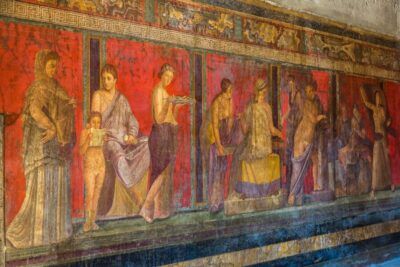


Pompeii Small Group Tour with an Archaeologist
Read our review →
Pompeii, Amalfi Coast and Positano Day Trip from Rome
Read our review →Browse the lists this tour appears in